Author: Tecnologia Tablu

  • Apple Pay now available in South Africa

    Apple Pay now available in South Africa

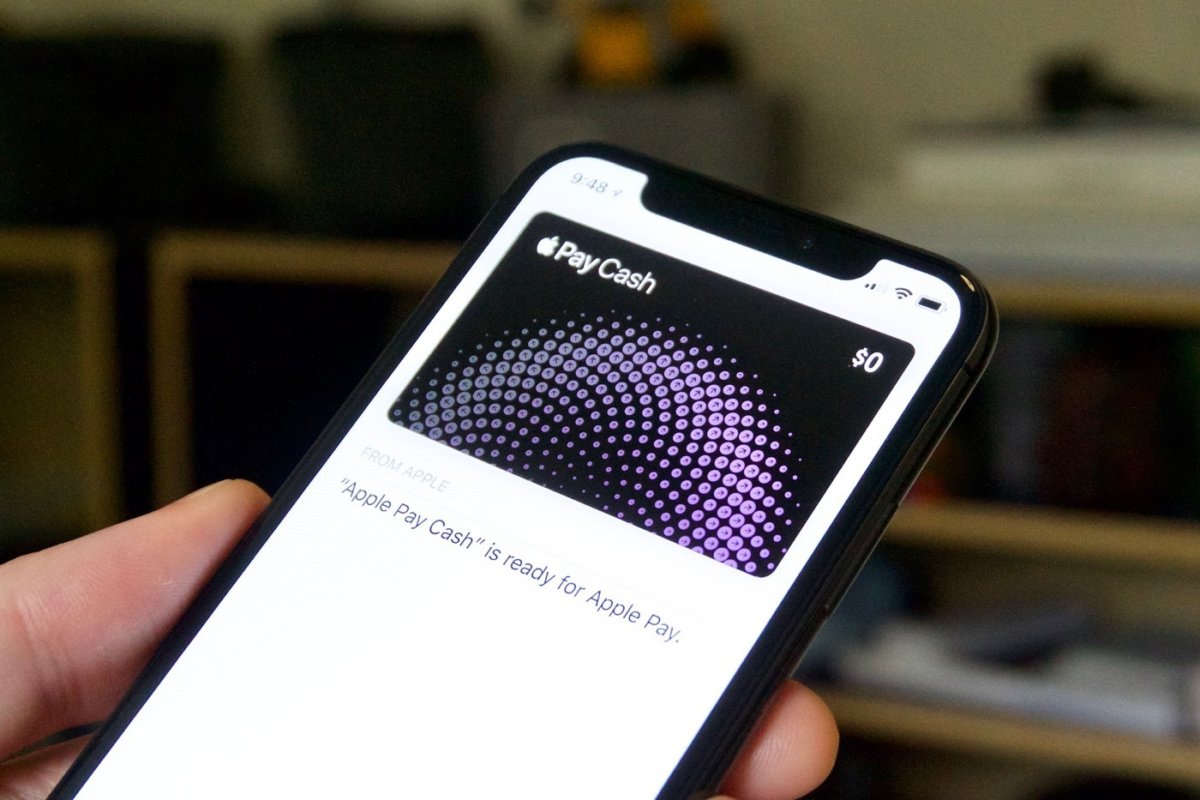
    Digital mobile payment platform Apple Pay is now available in South Africa, according to several Absa, Discovery Bank, and Nedbank customers. Apple Pay allows users to load a supported banking card and use their Apple device – such as an iPhone or cellular Apple Watch – to make a contactless payment at supported NFC-based terminals. 

    There have been various signs over the last few months that the service would be coming to banks, including mentions of it on the websites of Absa and Discovery Bank. Numerous MyBroadband forum members and Twitter users on Tuesday morning reported that they managed to load their banking cards to the Apple Wallet and successfully make payments with the service.

    Discovery Bank account holders on the MyBroadband forum started reporting that they were able to use Apple Pay after one user spotted ads from Discovery Bank for the Apple Pay platform on a Google Search. “Managed to successfully add my Discovery Bank card – didn’t need to change region settings,” one user stated.

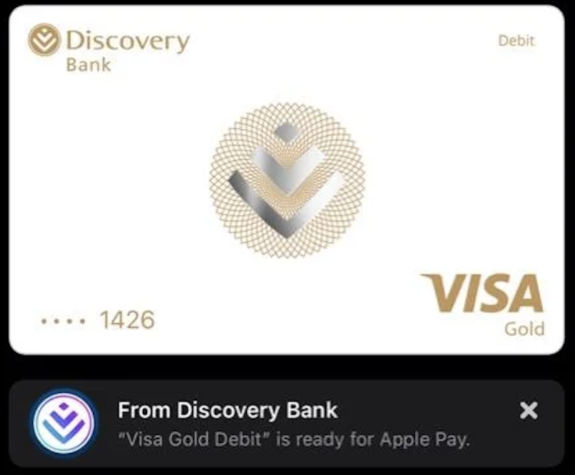
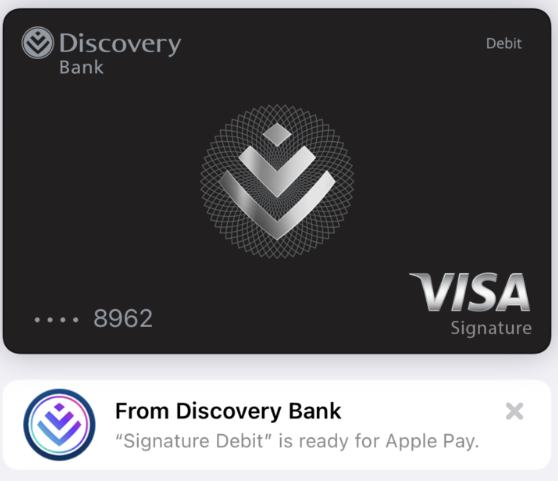
     Users shared screenshots showing the final step in the Apple Wallet process with their Discovery Bank cards successfully added. Two of the Discovery Bank cards confirmed to be supported included the Gold Debit and Signature Debit account cards, as shown in the images below.
    Other banking customers reported being able to load their Absa and Nedbank cards as well. “Nedbank Amex and VISA added successfully and managed to use at Seattle Coffee,” one MyBroadband forum members said.

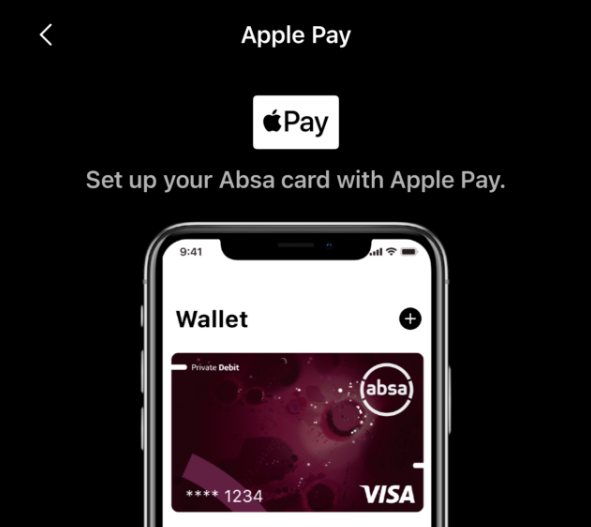
    Absa customers also said that they were receiving notifications in the banking app to set up their card with Apple Pay. Below are screenshots of the app notification and a user who successfully activated Apple Pay with an Absa Gold Debit card.
    Not available to FNB and Standard Bank customers yet

    A number of users indicated that attempts to load any FNB, Investec, and Standard Bank cards were unsuccessful. “I tried FNB Fusion and Credit Cards – both not working,” a MyBroadband forum member said.

    “Standard Bank also not working. Guess I’m opening a cheapie Discovery account until all this is resolved,” another stated. An Investec customer on Twitter shared a screenshot showing that he received a “Your Issuer Does not Yet Offer Support for This Card” message.

    Comment from banks

    MyBroadband contacted Absa, Discovery Bank, FNB, Nedbank, and Standard Bank for feedback on support for Apple Pay.

    Absa, Nedbank, and Discovery Bank have confirmed that their customers can now use Apple Pay.

    FNB Card CEO Chris Labuschagne said the bank was working with Apple and looked forward to bringing Apple Pay to its customers.

    “Once available, it will be accessible at scale to nearly 1 million iPhone users from our 6 million digitally active customers,” Labuschagne said.

    Standard Bank did not respond directly to questions over whether it supported Apple Pay.

    However, it said that it was “already well engaged with several new payment vendors and partners in order for our clients have access to the most recent digital tap-to-pay services as well as online partner payment systems”.

    It added that customers can expect further announcements on this in the near future.

  • WhatsApp Vs Signal, Telegram, Facebook Messenger: What Data Does Each App Collect?

    WhatsApp Vs Signal, Telegram, Facebook Messenger: What Data Does Each App Collect?

    Privacy labels on the App Store shows Facebook Messenger as the app collecting the most user data compared to Telegram, Signal, and iMessage.

    WhatsApp’s new privacy policy has people worried but how much data does it collect compared other messaging apps such as Signal, Telegram, and Facebook Messenger? A lot more, it turns out, as shown by the privacy labels of these messaging apps as shown on Apple’s App Store.Both apps owned by Facebook (Messenger and WhatsApp) collect usage data and location details, unlike the other apps. In contrast, Signal seems to be the most private messaging app and doesn’t collect any user data, as per the privacy details highlighted on the App Store. Perhaps unsurprisingly given this fact, Facebook earlier criticised Apple’s move to display privacy labels.

    The details available on the App Store show that Facebook Messenger is the most acquisitive when it comes to user data collection, followed by WhatsApp. The list of data both apps collect includes users’ purchase history, financial information, location details, contacts, phone number, email address, and usage data, among others.

    At a time when people are expressing concerns about WhatsApp’s new privacy policy changes, which you have to accept or your account will be deleted, it’s interesting to note all the data that the app, which has 400 million users in India alone, is collecting.

    You can see these details on the App Store yourself if you have an iPhone. Here’s a detailed breakdown of all the data that these apps collect.

    WhatsApp

    • Device ID
    • User ID
    • Advertising Data
    • Purchase History
    • Coarse Location
    • Phone Number
    • Email Address
    • Contacts
    • Product Interaction
    • Crash Data
    • Performance Data
    • Other Diagnostic Data
    • Payment Info
    • Customer Support
    • Product Interaction
    • Other User Content


    Facebook Messenger

    • Purchase History
    • Other Financial Info
    • Precise Location
    • Coarse Location
    • Physical Address
    • Email Address
    • Name
    • Phone Number
    • Other User Contact Info
    • Contacts
    • Photos or Videos
    • Gameplay Content
    • Other User Content
    • Search History
    • Browsing History
    • User ID
    • Device ID
    • Product Interaction
    • Advertising Data
    • Other Usage Data
    • Crash Data
    • Performance Data
    • Other Diagnostic Data
    • Other Data Types
    • Browsing History
    • Health
    • Fitness
    • Payment Info
    • Photos or Videos
    • Audio Data
    • Gameplay Content
    • Customer Support
    • Other User Content
    • Search History
    • Sensitive Info
    • iMessage
    • Email address
    • Phone number Search history
    • Device ID


    Signal

    • None. (The only personal data Signal stores is your phone number, and it makes no attempt to link that to your identity.)


    Telegram

    • Contact Info
    • Contacts
    • User ID


    Facebook criticised Apple’s privacy labels in newspaper advertisements shortly after they started appearing on the App Store last month. WhatsApp also separately accused Apple of implementing anti-competitive policies over the recent update. The app also provided some clarification on its user data collection through an FAQ. However, the list shared online suggests the reason for criticism and accusation.

    It is important to point out that the privacy labels on the App Store are based on the self-submission made by developers to Apple that is not yet manually checked. But nonetheless, companies including Facebook also provide such details in their lengthy privacy policies as well that aren’t read by a large number of their users.

  • FNB launches new stokvel accounts with no monthly fees

    FNB launches new stokvel accounts with no monthly fees

    FNB has announced the launch of new digital stokvel accounts that carry no monthly fees.

    According to the bank, these accounts will help to better manage the administration of stokvels, along with deposits and distribution of funds.

    Users will be able to manage contributions and payouts via the FNB app, online banking, and cellphone banking.

    “Stokvels or group savings clubs are a vital part of our society; hence we are delighted to offer an innovative solution to help them manage their money through safer and efficient channels,” says Raj Makanjee, CEO of FNB and Private Banking.

    “Unlike most banks which offer traditional bank accounts for stokvels, the design of our solution is based on understanding the core needs of stokvels.”

    FNB says that the digitisation of stokvels meets the new needs of those investing in them. Many modern stokvels have moved from focusing on burials or groceries to becoming investment clubs.

    By creating digital channels, administrators can more easily manage the growing needs of members.

    What the new FNB digital stokvel account offers

    According to FNB, a number of features are available for users with no monthly fees.

    These include:

    • EFTs from a bank account or free unlimited cash deposits via FNB deposit-taking ATMs.
    • Member payouts from the stokvel treasurers or administrator.
    • The ability to add members and update member details.

    Payouts will still need to be approved by two extra signatories, FNB notes.

    Meanwhile, members can choose whether to receive their payouts using a bank account or FNB eWallet.

    Those with an FNB bank account can also withdraw stokvel payouts from Cash@Till counters at Checkers, Shoprite, Pick n Pay, and Boxer.

    Source

  • The role of a VC on a Start-up or Scale-Up

    The role of a VC on a Start-up or Scale-Up

    And why they are crucial for risk reduction, shortening the time to brake-even, and achieving significant growth


    What are Start-Ups & Scale-Ups?

    We cannot talk about Venture Capitalists or VCs without talking about startups, which are companies at an early stage of operations, usually with a single product/service focus and an unproven business model. Traditionally founded by more than one entrepreneur/founder, these companies tend to be high risk and high reward. Their founders fund them at the very early stages, most of the time from concept development to 1st prototype, at least. 

    A Scale-Up, on the other hand, has managed to prove entirely or at least partially their business model, but need or want to grow (for strategic or financial reasons), vertically, horizontally, or geographically, to:

    (1) outcompete the current players in the market, and to be able to either take some market share from the existing market in which it operates or to enter an entirely new segment, 

    (2) solidify their presence in the market before a competing offer from a substitute or competitor comes along (more of a strategic approach, rather than financial), or 

    (3) to increase its’ profits (from initiatives that reduce costs or increase revenue) and, or customer base.

    It’s all about Business Models!

    Business Models or BMs, which consists on a Value PropositionValue Architecture and Profit Equation, sit at the core of the ability of a company, product, or service to generate profits to his shareholders. Because BMs are at the heart of every business, there are many already proven models for any entrepreneur to choose from, which makes deciding to create a new one, or at least to alter an existing one significantly, comes at very high risk, not only for the company or business itself but also for the ones investing resources into it.

    Therefore BMs are typically the first metric being analyzed by any investor, individual or firm, before making any other strategic analysis, such as Porter’s 5 Forces, which studies (1) the level of competition in the industry, (2) the potential of new entrants in the industry, (3) the bargaining power of your suppliers, (4) the bargaining power of your customers, and (5) the threats of substitute product or service.

    Because of the unproven Business Models, these companies are typically not attractive to banks, which are conventional financing options.

    Venture Capitalists – the start-up and scale-up heroes!

    According to Investopedia, Venture Capitalists or VCs are private equity investors that provide capital to companies exhibiting high growth potential in exchange for an equity stake.

    The story of VCs goes back to the 1900s, with wealthy families such as the Rockefellers and Vanderbilts serving as alternative financing options to early-stage unproven startups – only a specific type of individuals or firms take a chance in these startups, which are usually VCs. 

    In the current saturated global market, usually high growth potential is associated with disruption, in this case, disruption in business models, being on the value proposition itself (the offer), or on the value architecture (the way the offer is produced and delivered to the market). For example, Uber, its Business Model comprises a new value proposition for random drivers and a new value architecture for passengers, creating an entirely new profit equation.

    Unfortunately, all disruptions are usually not understood until it materializes and creates the “ …this is so obvious” factor, which means that it will not be understood by many, at least not in the early, unproven stages.

    And this is how VCs come into action to save the day. 

    Typically, experienced, unconventional, influential, and with money to spend, VCs are most of the time, the only alternative, other than FFFs (friends, family, and fools), to invest in early-stage, unproven businesses. But their value does not stop on the funds they provide; I would argue that their actual value lies on other intangible factors such as the experience of successfully running a business (or failing at one), and the level of influence in the market, through the various resources, such as relationships established and nurtured through the years. As Eric Schmidt, one of the early and most pivotal CEOs of Google and Alphabet, wrote in his co-authored of the number one best seller Trillion Dollar CoachEvery famous athlete and performer has a coach, somebody who can watch what you are doing and give you perspective. A coach helps. – this quote is inspired by the late Bill Campbell (aka the coach of coaches), who believed that it is pivotal for a CEO to have someone by his side that can provide guidance and that also can leverage his/her relationships to obtain any kind of advantage, being for partnership, to have access to expert opinions, or any other, can and will make a difference on the day to day living of a CEO toward solidifying his/her disruptive business model.

    Conclusion

    My advice to all startups, especially the ones in Mozambique, would be to choose a VC – and they come in many shapes and forms – not only that can fund your crazy, but soon to be a great idea, but also someone that can coach you throughout the process and help open particular doors as well. For that, you will have to be willing to give a part of your business, as it is only fair, given that he or she will help you make it a success.

    And remember, “100% of an idea is not worth more than 1% of a successful business, especially if it never sees daylight.

    Thanks for the time you took to read this,
    Share it with whom you might think it can be of use, or just share it for no reason 😉

    All the best in your endeavors,
    Regards.

    José Samo Gudo
    CEO of Tablu Tecnologias
    Connect to José on Linkedin

  • Fintech startup Oxygen raises $17M in Series A round

    Fintech startup Oxygen raises $17M in Series A round

    Digital banking startup ReliefClub Inc., which does business as Oxygen, said today it has raised $17 million in a new round of funding.

    Runa Capital led the Series A round, which also included participation from S7V, 1984.vc, EFG Hermes, Rucker Park and Inventures, as well as celebrity and prominent fintech investors such as Frank Strauss, of the Private & Commercial Bank for Deutsche Bank AG, Plaid Inc. co-founder William Hockey, Ankur Nagpal, Peter Treadway and NFL wide receiver Larry Fitzgerald.

    Oxygen has built a digital banking platform and mobile application that it says provides flexible financial services to those who have multiple income streams, contract work or freelance working arrangements.

    The platform provides a full range of banking services through its mobile app, which runs on both iOS and Android devices. It provides users with credit cards and debit cards and enables them to send and receive money, apply for a virtual credit card, make payments in stores, apply for loans and perform various other banking-related tasks directly from the app. As a bonus for users, Oxygen doesn’t charge monthly fees, which means no overdraft, late or minimum balance fees are imposed.

    Users can choose from a personal or business account, and they can top up their account any time by using GreenDot locations at stores such as Walmart or Walgreens. Oxygen has partnered with Visa Inc. on its Fast Track program that enables users to benefit from the reach and security of Visa’s network. It also leverages Visa’s real-time push payment solution Visa Direct to ensure users can be paid fast.

    The company launched its services in January 2020 and says it has enjoyed tremendous growth in the past year, partly thanks to the coronavirus pandemic. It claims more than 125,000 accounts have been opened, with a 969-times revenue increase, though it doesn’t provide specific numbers and that growth is no doubt off a small base.

    “This investment not only validates what we’ve built but also enables us to continue pursuing our vision of building financial tools that integrate seamlessly with the digital world of today and delight our customers,” said Oxygen Chief Executive Hussein Ahmed. “We founded Oxygen because we wanted to provide financial services in the same way people interact with technology in their everyday lives.”

    Oxygen said it plans to use the funding to scale up its team and offer new financial products and services to users in order to accelerate its growth.

    Source

  • 5 crucial bitcoin predictions for 2021, from a fintech expert

    5 crucial bitcoin predictions for 2021, from a fintech expert

    This year has been a wild ride for anyone invested in, or even just watching, the bitcoin market. The world’s most valuable virtual currency in December traded at more than $23,000.

    When the U.S. first began grappling with Covid-19 in early March, Bitcoin was below $4,000. For owners or sellers, it’s a gut-twisting source of gains and losses. For those (like me) on the sidelines, it’s an entertaining market show, with tinges of jealousy and dizziness.

    Despite that tremendous bitcoin price fluctuation — in a generally upward direction — 2020 was also a year of relative maturity for a currency that, after all, has only been trading for a decade. What we see as the crucial bitcoin trends in 2021:

    1. More mainstream acceptance

    Bitcoin’s use in everyday life has always had a chicken-egg problem: Very few use or accept it because … for one thing, very few use or accept it.

    But 2020 saw a striking evolution in bitcoin adaptation. Prominent fintech companies, from Square’s investment of $50 million in bitcoin to PayPal allowing its users to buy and sell bitcoin, gave it a stamp of approval.

    In 2021, we’ll likely see an extension of this mainstream embrace. Look for at least one major U.S. or European bank to announce some kind of system where they either enable bitcoin purchases or agree to hold digital assets for their clients.

    2. Competition from Big Tech

    Whatever bitcoin may or not have accomplished in its decade of existence, it has forced a lot of big, global entities to think about offering an international digital currency.

    Every company involved in the payment space understands not only that there is a market for digital payments still up for grabs, but that payments involving different currency markets have the most potential. That’s because currently such transactions can take days to resolve, and often involve hefty fees.

    Bitcoin has demonstrated, if embryonically, that a global digital currency can dramatically streamline that process. This year, both Facebook and Google — companies with a massive global reach that bitcoin can only dream of — moved forward with big digital currency plans.

    Tech offerings like Facebook’s Diem aren’t exactly the same as bitcoin, but if they start to catch on in 2021, they may eat a little into bitcoin’s growth.

    3. Competition from central banks

    This year, the Bank for International Settlements issued a report and survey indicating that 80% of the world’s central banks are working on some form of digital currency.

    China has taken the digital currency experimentation much further than any other nation. Recently, in the eastern Chinese city Suzhou, just west of Shanghai, a lottery was held in which 100,000 residents each received 200 renminbi (about $30) via a digital wallet. They were encouraged to link their digital cash to their bank accounts, and if they didn’t spend their digital cash within a few weeks, it disappeared — both great techniques to advance the experiment.

    As China moves toward nationwide adaptation of the digital yuan, it is likely to undercut demand for bitcoin and other independent cryptocurrencies. Next year may see similar experiments in other countries.

    4. A new regulatory playing field

    President-elect Joe Biden’s administration will have higher priorities in its first 90 days than regulating cryptocurrency, and of course Congress’ mood and expertise on the subject is hard to read.

    The natural assumption is that a Democratic administration will regulate more stringently than a Republican administration, yet some have asserted that Biden will be “good for cryptocurrency.”

    Maybe, but bitcoin enthusiasts tend to overlook issues like anonymity and its potential use for fraud; for regulators, those are very serious concerns.

    Biden’s team might well come up with a more comprehensive and rational way of regulating cryptocurrency, but I would not bet on any favoritism toward bitcoin in particular.

    5. Continued volatility

    Because the value of bitcoin is not directly tied to any obvious real-world phenomenon (such as fiscal or monetary policy), it can appreciate or depreciate in ways that are hard to predict or even explain.

    As an investment, this makes it hard to recommend for anyone hoping to avoid big losses. Some say bitcoin could reach as high as $50,000 next year, and although that seems extreme, it is not out of the question if investors move money from other assets into bitcoin.

    Of course, it is just as possible that the price will head in the opposite direction in 2021. The one thing that seems certain is that the wild ride of 2020 will be repeated — so buckle up.

    Source

  • Huawei Eyes Ethiopia Growth as Telecoms Industry Opens Up

    Huawei Eyes Ethiopia Growth as Telecoms Industry Opens Up

    Huawei Technologies Corp. is positioning itself to get more business in Ethiopia, as the East African economy opens up its telecommunications sector.

    “Ethiopia is rising and becoming much more important for the future,” Loise Tamalgo, Huawei’s head of public relations for 22 countries in sub-Saharan Africa, said in an interview in Ivory Coast’s commercial capital, Abidjan. The company is likely to move a regional office covering about five nations from the Democratic Republic Congo to Ethiopia, where it currently only has a country office, he said.

    “Our strategy is very simple,” Tamalgo said. The company plans to leverage its position as the main vendor of the state-owned monopoly Ethio Telecom to bid for opportunities in the country, he said.

    Liberalization of the telecom industry is at the forefront of what Ethiopian Prime Minister Abiy Ahmed said in 2018 would be a wide-ranging privatization program. The plan was intended to bring in much needed foreign exchange and boost the economy, while improving connectivity across the Horn of Africa nation.

    The country is seeking to double its mobile towers to about 14,000, which would require an investment of up to $1.1 billion, and build out its fiber-optic network from less than 30,000 kilometers (18,600 miles) currently, according to the Ethiopian Communications Authority. It also plans to sell a 40% stake in Ethio Telecom and issue two new telecom licenses next year.

    Vodacom Group, a subsidiary of U.K.’s Vodafone Group, is among carriers planning to bid for the licenses, though an ongoing military conflict is giving the carrier cause for concern. MTN Group, Africa’s largest career by subscribers, and Paris-based Orange SA have also expressed interest in entering Africa’s second-most populous country, with more than 100 million people.

    Last week, the U.S. International Development Finance Corp. approved a loan of as much as $500 million to a Vodafone-led consortium seeking to start an Ethiopian mobile-phone network operator. The facility will finance the design, development and operation of a new private mobile network provider and the acquisition of a license.

    China’s biggest tech firm has a long-term approach to Africa, which currently represents 5% of its global revenue, Tamalgo said. Other priority markets for the company on the continent are Ivory Coast, Senegal, the Democratic Republic of Congo and Cameroon. “The governments there are willing to do a lot of projects,” he said.

    As Huawei has emerged as a leader in 5G, a technology which promises super-high-speed connectivity, it’s also become a major target of the U.S., which has been trying to convince its allies to ban Huawei equipment from their national networks on spying concerns. The U.K. decided in July to join the boycott, followed by Sweden. Huawei has repeatedly denied that it helps China spy on other governments and companies.

    In Africa, where it is a top vendor ahead of rivals such as Nokia Oyj and Ericsson AB, several leaders have defended the company. South African president Cyril Ramaphosa said at summit in August that Huawei was a victim of the trade war between the U.S. and China, and that his country couldn’t afford to get caught in that fight. Ethiopia, Kenya and other countries across the region have echoed Ramaphosa’s stance.

    Source

  • Deutsche Telekom and Microsoft redefine partnership to deliver high-performance cloud computing experiences

    Deutsche Telekom and Microsoft redefine partnership to deliver high-performance cloud computing experiences

    Deutsche Telekom Group and Microsoft Corp. announced an expansion of their partnership that will help customers of all sizes accelerate their cloud transformation initiatives.

    For many companies, the cloud represents an opportunity to reduce IT costs, increase flexibility and accelerate innovation. However, to fully take advantage of cloud computing, it requires a high-performance network that can scale to meet increasing technology demands. By combining Microsoft’s cloud and AI capabilities with Telekom’s Cloud Migration Framework and telecommunications services, the companies will enable customers to increase their productivity, build more agile and resilient operations, and deliver new cloud offerings faster.

    “We have agreed on the framework for joint strategic growth with our long-term partner Microsoft. We are delighted,” said Adel Al-Saleh, member of the Deutsche Telekom Board of Management and CEO of T-Systems. “This partnership will enable us to enhance services for our customers. We will also be supporting each other with digitalization and network build-out.”

    “The case for digital transformation has never been more urgent. We know that the next decade of economic performance for every business, whether large or small, will depend on the digital investments made today,” said Jean-Philippe Courtois, executive vice president and president, Microsoft Global Sales, Marketing and Operations. “Through this strategic partnership, which combines the power of Deutsche Telekom’s network and Microsoft’s cloud, customers will have more opportunities to become resilient, accelerate innovation and ultimately drive success.”

    Trusted cloud infrastructure to accelerate business innovation

    The delivery of secure and powerful software applications requires a modern IT infrastructure. To accelerate business innovation, Telekom plans to migrate the majority of its internal IT workloads to the public cloud by 2025, and Azure is a central part of that strategy. Through a companywide training program, thousands of Telekom employees will learn how to maximize the benefits of Azure.

    Moving mainframe workloads to the cloud is one of the targeted areas of the partnership. Historically, mainframes were designed as scale-up servers to run high-volume online transactions and batch processing. Using cloud-based mainframes, businesses can deliver new services based on evolving customer demands without retrofitting legacy hardware. This means companies can drive scale, business continuity and energy efficiency while reducing operational and hardware costs.

    Telekom will also offer its customers direct access to the Microsoft cloud through Azure ExpressRoute. By bypassing the public internet, customers will have increased agility through faster connectivity to better address regional compliance and data residency needs.

    Enabling digital collaboration and streamlining business operations

    To help people and businesses be more connected and productive from anywhere, Telekom will offer Microsoft 365, including Microsoft Teams. As part of this, the companies have started a project for German schools to reimagine traditional approaches to education, enabling remote learning through cloud-based IT infrastructure, modern devices and the cloud productivity and collaboration applications within Microsoft 365.

    To leverage the benefits of cloud computing for critical business processes, such as enterprise resource planning and supply chain management, Telekom supports its customers with moving their SAP environments to Azure. SAP solutions on Azure offer enterprise-grade security, and business continuity and reduce hardware expenses, making it easier for startups and smaller organizations to get started.

    Accelerating cloud initiatives: assessment, migration, service

    Telekom’s enterprise customer unit T-Systems has migrated and securely managed large-scale applications and critical enterprise workloads. With Azure as a preferred cloud platform for select solution areas, T-Systems is providing these capabilities to companies across all industries so they can harness the global scale, security and latest advances without needing to manage installation and maintenance. This Cloud Migration Framework combines automated assessment, cloud migration and services management to help accelerate customers’ cloud initiatives.

    Small and medium-sized businesses will benefit from these offerings as they can focus on their core competencies and don’t need to provide the resources and knowledge usually required to implement a comprehensive cloud strategy.

    Telekom and Microsoft will work closely together to continue to address compliance needs and European regulatory requirements.

    Source

  • Netflix Android and iOS Studio Apps — now powered by Kotlin Multiplatform

    Netflix Android and iOS Studio Apps — now powered by Kotlin Multiplatform

    Over the last few years Netflix has been developing a mobile app called Prodicle to innovate in the physical production of TV shows and movies. The world of physical production is fast-paced, and needs vary significantly between the country, region, and even from one production to the next. The nature of the work means we’re developing write-heavy software, in a distributed environment, on devices where less than ⅓ of our users have very reliable connectivity whilst on set, and with a limited margin for error. For these reasons, as a small engineering team, we’ve found that optimizing for reliability and speed of product delivery is required for us to serve our evolving customers’ needs successfully.

    The high likelihood of unreliable network connectivity led us to lean into mobile solutions for robust client side persistence and offline support. The need for fast product delivery led us to experiment with a multiplatform architecture. Now we’re taking this one step further by using Kotlin Multiplatform to write platform agnostic business logic once in Kotlin and compiling to a Kotlin library for Android and a native Universal Framework for iOS via Kotlin/Native.

    Source

    Kotlin Multiplatform

    Kotlin Multiplatform allows you to use a single codebase for the business logic of iOS and Android apps. You only need to write platform-specific code where it’s necessary, for example, to implement a native UI or when working with platform-specific APIs.

    Kotlin Multiplatform approaches cross-platform mobile development differently from some well known technologies in the space. Where other technologies abstract away or completely replace platform specific app development, Kotlin Multiplatform is complementary to existing platform specific technologies and is geared towards replacing platform agnostic business logic. It’s a new tool in the toolbox as opposed to replacing the toolbox.

    This approach works well for us for several reasons:

    1. Our Android and iOS studio apps have a shared architecture with similar or in some cases identical business logic written on both platforms.
    2. Almost 50% of the production code in our Android and iOS apps is decoupled from the underlying platform.
    3. Our appetite for exploring the latest technologies offered by respective platforms (Android Jetpack Compose, Swift UI, etc) isn’t hampered in any way.

    So, what are we doing with it?

    Experience Management

    As noted earlier, our user needs vary significantly from one production to the next. This translates to a large number of app configurations to toggle feature availability and optimize the in-app experience for each production. Decoupling the code that manages these configurations from the apps themselves helps to reduce complexity as the apps grow. Our first exploration with code sharing involves the implementation of a mobile SDK for our internal experience management tool, Hendrix.

    At its core, Hendrix is a simple interpreted language that expresses how configuration values should be computed. These expressions are evaluated in the current app session context, and can access data such as A/B test assignments, locality, device attributes, etc. For our use-case, we’re configuring the availability of production, version, and region specific app feature sets.

    Poor network connectivity coupled with frequently changing configuration values in response to user activity means that on-device rule evaluation is preferable to server-side evaluation.

    This led us to build a lightweight Hendrix mobile SDK — a great candidate for Kotlin Multiplatform as it requires significant business logic and is entirely platform agnostic.

    Implementation

    For brevity, we’ll skip over the Hendrix specific details and touch on some of the differences involved in using Kotlin Multiplatform in place of Kotlin/Swift.

    Build

    For Android, it’s business as usual. The Hendrix Multiplatform SDK is imported via gradle as an Android library project dependency in the same fashion as any other dependency. On the iOS side, the native binary is included in the Xcode project as a universal framework.

    Developer ergonomics

    Kotlin Multiplatform source code can be edited, recompiled, and can have a debugger attached with breakpoints in Android Studio and Xcode (including lldb support). Android Studio works out of the box, Xcode support is achieved via TouchLabs’ xcode-kotlin plugin.

    Networking

    Hendrix interprets rule set(s) — remotely configurable files that get downloaded to the device. We’re using Ktor’s Multiplatform HttpClient to embed our networking code within the SDK.

    Disk cache

    Of course, network connectivity may not always be available so downloaded rule sets need to be cached to disk. For this, we’re using SQLDelight along with it’s Android and Native Database drivers for Multiplatform persistence.

    Final thoughts

    We’ve followed the evolution of Kotlin Multiplatform keenly over the last few years and believe that the technology has reached an inflection point. The tooling and build system integrations for Xcode have improved significantly such that the complexities involved in integration and maintenance are outweighed by the benefit of not having to write and maintain multiple platform specific implementations.

    Opportunities for additional code sharing between our Android and iOS studio apps are plentiful. Potential future applications of the technology become even more interesting when we consider that Javascript transpilation is also possible.

    We’re excited by the possibility of evolving our studio mobile apps into thin UI layers with shared business logic and will continue to share our learnings with you on that journey.

  • The blockchain-enabled intelligent IoT economy

    The blockchain-enabled intelligent IoT economy

    I. Setting the stage

    The IoT and consumer hardware industry have seen multiple failures and a few exits over the last 12–18 months (while the B2B side has been doing a bit better overall) and some critics have been recently made to the industry to slow down.

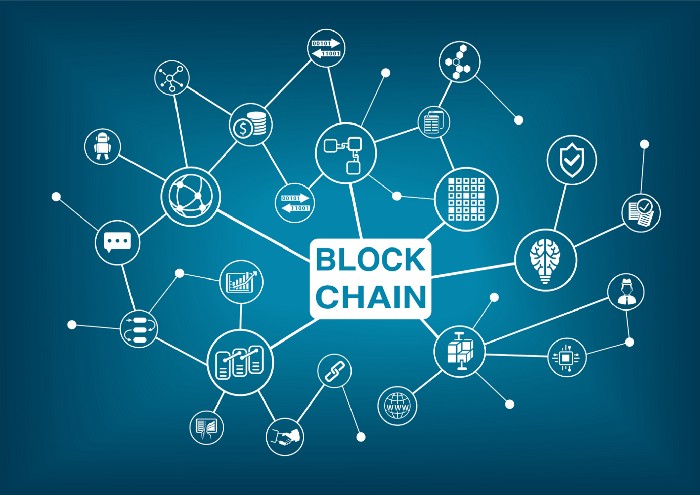
    In spite though of the current pushback, the sector is still increasing and attracting capital and talents. Clearly, there are multiple reasons on why this is the case, but I firmly believe that one of those is the convergence of IoT and Artificial Intelligence with the Blockchain as the infrastructural backbone, which is unlocking the next step not only on the tech-side but also on the business one.

    The industry has indeed evolved from merely creating products, to create networks of products (namely, Internet of Things), to eventually create Intelligent networks of products (I-IOT). The transition between the first and the second class was straightforward: I will create more (different) products and try to link them together. This generated many new possibilities, but it was clear from day one that it came with a series of issues hard to tackle, such as security/privacy issues, validation/authentication problems, and connectivity bottlenecks.

    And this is where AI and Blockchain come in. The second transition indeed was made possible through a combination of improvements in computing powers, device miniaturization, ubiquitous wireless connectivity and efficient algorithms (Porter and Heppelmann, 2014). The new class of smart products will be (and already are, to some extent) able to monitorcontroloptimize, and automatize processes and products with an accuracy previously not imaginable.

    Of course, as often happens, the bonus on integrating those fundamental technologies was that they ended up modifying IoT as much as IoT was impacting them in turn.

    This convergence is however not accidental, but rather an inevitable necessity almost designed by default:AI needs data, IoT needs intelligence and insights, and both of them need security and transparent marketplaces.

    The magnitude of this convergence is so high that will affect several sectors swinging from energy and manufacturing to home environment, robotics and drones, supply chain, logistics, and healthcare. Every field which is historically data-rich but information-poor will be touched (or should I say brutally hit?) by those technologies.

    I will explore how in the next few sections.

    II. How Blockchain is changing IoT

    The blockchain as a technology is basically providing the IoT stack with a secure data infrastructure to capture and validate data. As simple as that. Or at least it is a simple statement that contains three different nuances:

    • Securing data better: the first one is indeed the concept of storing data securely. We know that blockchain protocols are not designed to heavily store data (they are indeed ledgers, not databases), but they can provide “control points” to monitor data access (Outlier Ventures, 2018);
    • Creating the right incentive structure: a blockchain can create the right incentive structure to share IoT data, which is something we are currently missing. Cross-sectional data have been proved to have the most disruptive impact when applied across different industries, but the problem of how and why sharing data in the first place remains. Blockchain (and tokenization) can be used to solve this economic dilemma, and once data are shared can be more easily validated, authenticated and secured;
    • Creating a network of computers: distributing the workload and implement parallel computing tasks is something it is usually attributed to new AI or High-Performance Computing (HPC) applications, but a blockchain would be essential in this development authenticating and validating the single nodes of those networks (companies that are working in this space are GolemiExecOnaiHadronHypernetDeepBrain Chain, etc.).

    III. How Blockchain can change AI

    AsI have already previously mentioned, blockchain can affect AI in multiple ways:

    • Help AI explaining itself (and making us believe it): the AI black-box suffers from an explainability problem. Having a clear audit trail can not only improve the trustworthiness of the data as well as of the models but also provide a clear route to trace back the machine decision process (i.e., where data are coming from, who wrote the original algorithm, what data was used for training, etc.) and can establish the foundations for “algorithms standards” (e.g., which main algorithms, packages, and framework have been developed using a specific training set). This is also essential in machine-to-machine interactions and transactions (Outlier Ventures, 2017), and provides a secure way to share data and coordinate decisions, as well as a robust mechanism to reach a quorum (extremely relevant for swarm robotics and multiple agents scenarios). Rob May expressed a similar concept in one of his last newsletters;
    • Increase AI effectiveness: a secure data sharing means more data (and more training data), and then better models, better actions, better results…and better new data. A network effect is all that matter at the end of the day (AIBlockchain is an example of a multi-application intelligence that uses different sets of data);
    • Lower the market barriers to entry: let’s go step by step. Blockchain technologies can secure your data. So why shouldn’t you store all your data privately and maybe sell it? Well, you probably will. So first of all, blockchain will foster the creation of cleaner and more organized personal data. Second, it will allow the emergence of new marketplaces: a data marketplace (low-hanging fruit, currently pursued by companies such as Ocean ProtocolOpenMinedNeuromationBurstIQAtMatrixEffect.ai, DatumStreamrDeuroDatawallet, etc.); a models marketplace (e.g., Dbrain, etc.); and finally even an AI marketplace (examples are SingularityNETFetch.aidoc.aiComputable LabsAgorai, and similar). Hence, easy data-sharing and new marketplaces, jointly with blockchain data verification, will provide a more fluid integration that lowers the barrier to entry for smaller players and shrinks the competitive advantage of tech giants. In the effort of lowering the barriers to entry, we are then actually solving two problems, i.e., providing a wider data access and a more efficient data monetization mechanism. It is also possible that a blockchain-enabled AI will eventually create new organizational structures for intelligent agents to cooperate or compete;
    • Reduce catastrophic risks scenario: an AI coded in a DAO with specific smart contracts will be able to only perform those actions, and nothing more (it will have a limited action space).

    IV. How AI can change IoT

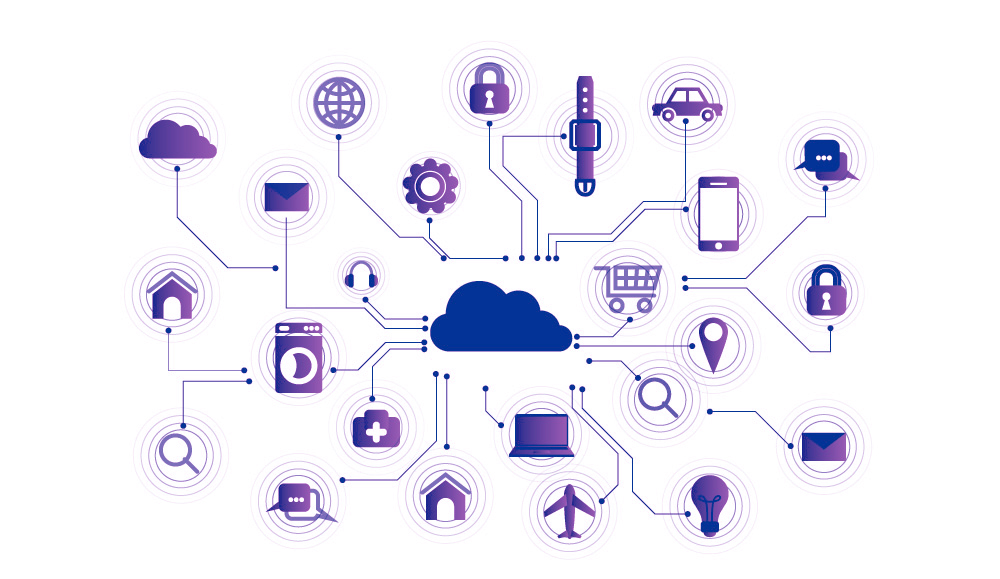
    AI is feeding itself with the new stream of data coming from the physical world and the billions (if not trillions) of sensors and “things” that are capturing and monitoring everything we do.

    At the same time though, as soon as an AI starts making sense of IoT data flows, it will:

    • Increase data efficiency: an AI will inform back those sensors on what data should be captured and stored, and above all where those sensors should be placed to be both more efficient and more effective;
    • Save costs: it is fair to think that an algorithm performance should be tested continuously, and once reached the optimal level with data marginal return approaching zero (i.e., a point in which adding more data does not improve the prediction outcome), an AI will not store or capture more data, resulting in energy, servers, computation, cloud, and infrastructural savings. In addition to that, unplanned downtime prediction is a second cost saving possibility an AI will open for an IoT ecosystem;
    • Increase security: an AI could clearly be able not only to fight potential external threats for an IoT network but even predict them (e.g., AnChain);
    • Compute on-the-flyedge/fog computing is quickly becoming a hot topic since it allows on-device computation, which in turns reduces the response time for an action, limits the exposures to privacy and compliance issues, and solves the huge connectivity bottleneck problem. A few startups are already working in this direction (FoghornMythicNeurealSONMNebula AI, etc.) as well as big incumbents as Google (who recently released, in addition to federated learning, an entire stack made by an Edge TPU and a Cloud IoT Edge platform), but likely things will change here due to the rapid development of specialized training and inference chips and the forthcoming introduction of the 5G. Cloud is still necessary for computationally intensive operations and to store data centrally to guarantee (maybe?) an extra layer of security (meaning, network disaster recovery), but custom chips and edge computing algorithms can do most of the operations the final customer needs directly on the device.